Do Ceramic Knives Keep Avocados From Turning Brown?

We have received many many requests to do the ceramic knife & apples test using avocados, so how could we resist? We were actually quite interested in the results too.
For this test we did a similar setup as the apples test. We took 1 avocado and cut one end off with a metal knife and one end with a ceramic knife. We left the pieces out and took pictures at random.
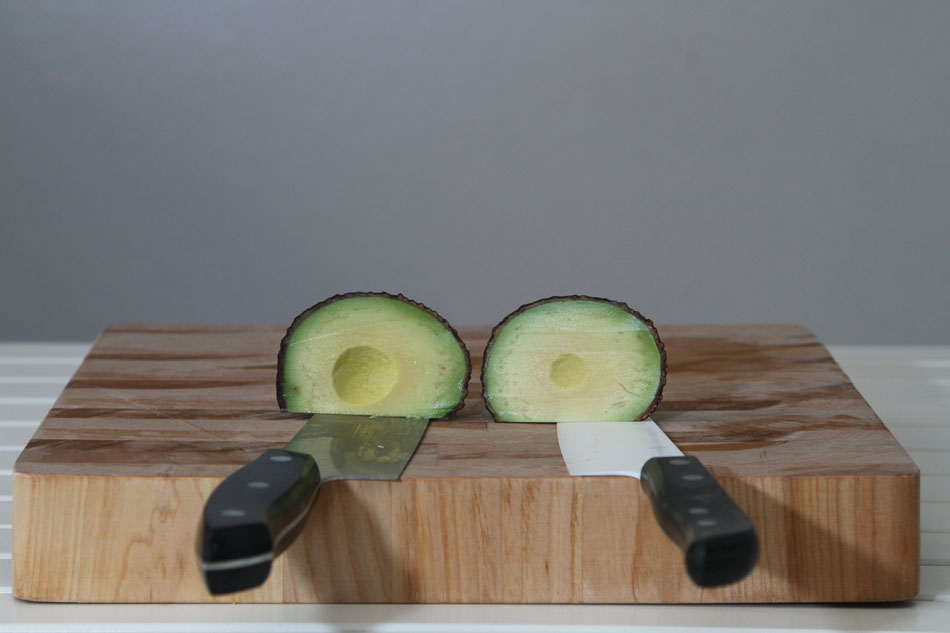 4:50pm
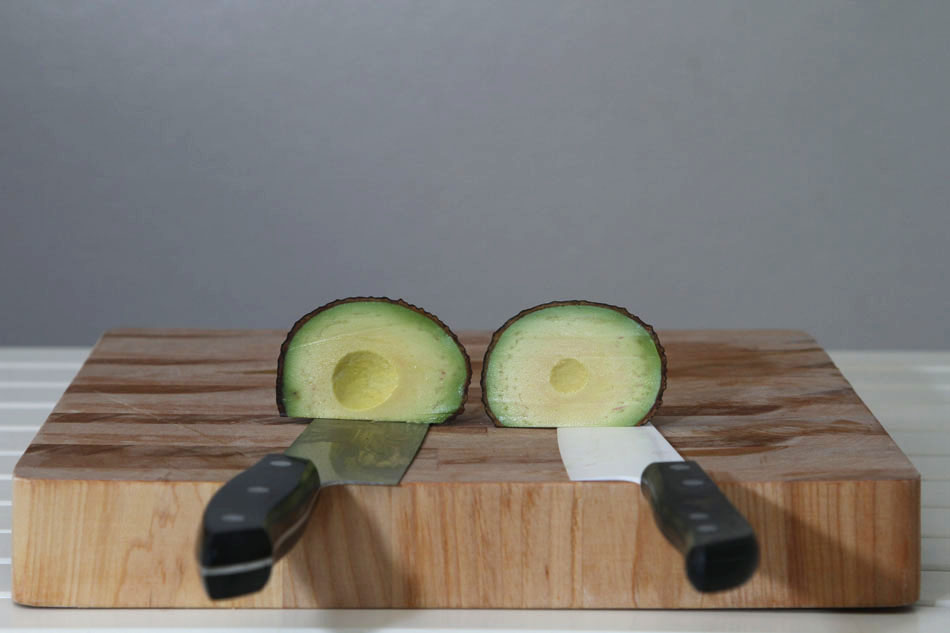 5:17pm
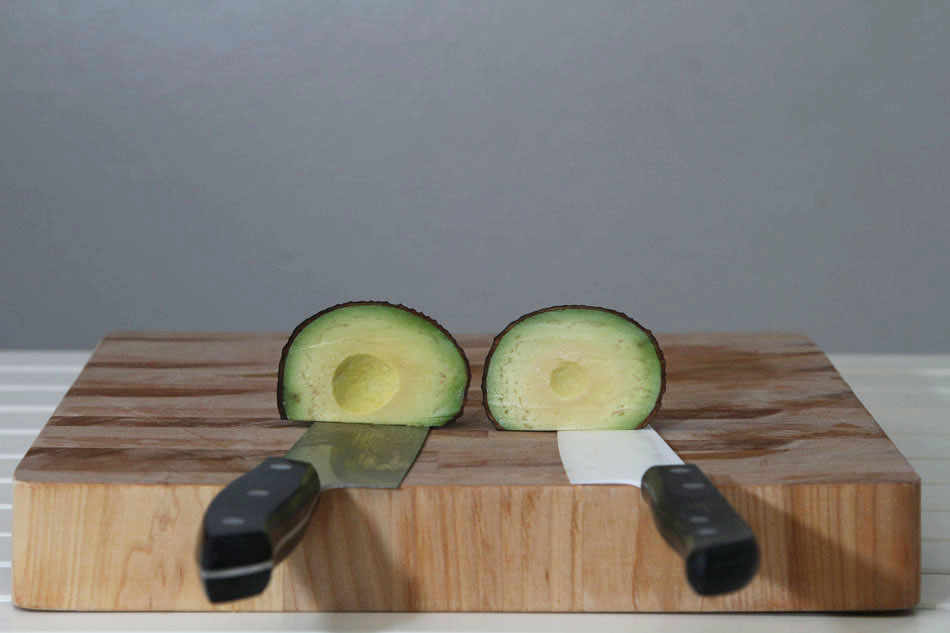 6:27pm
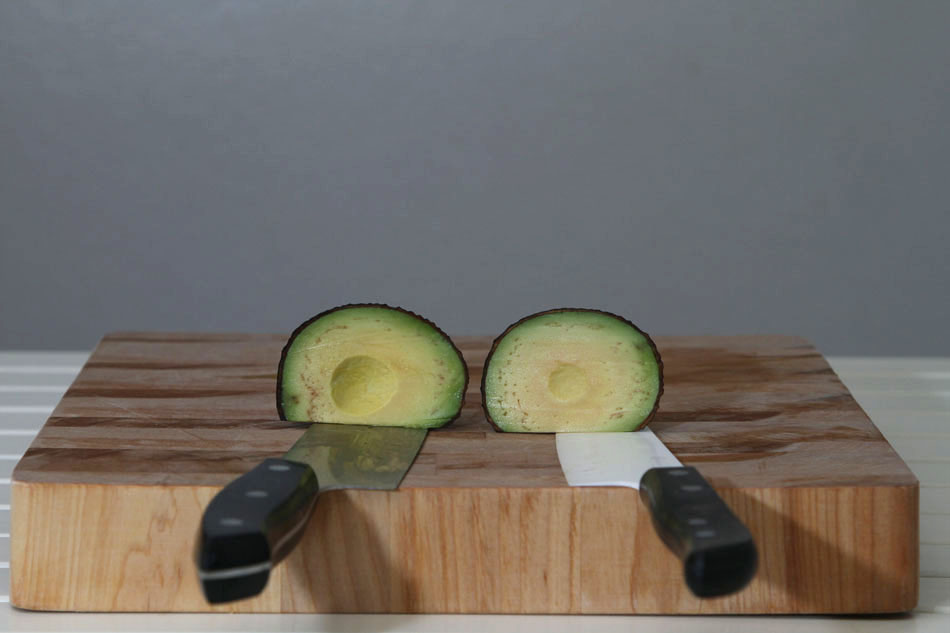 7:23pm
 8:49pm
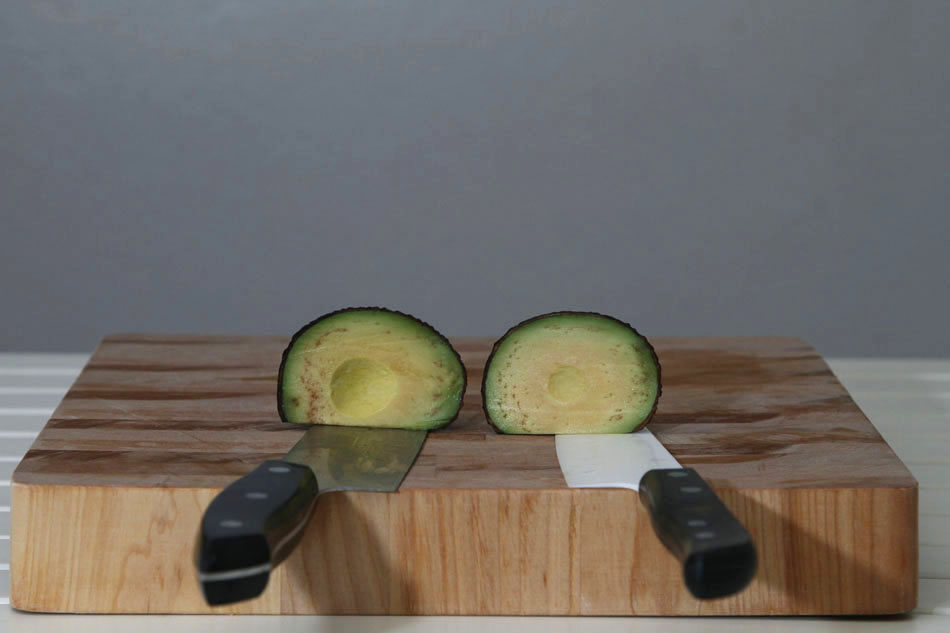 9:16pm
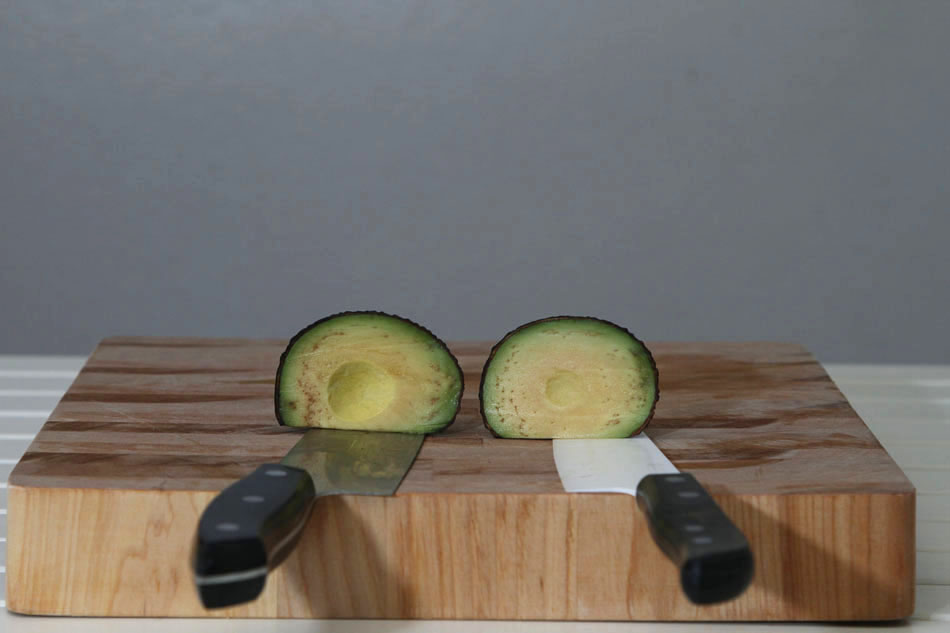 9:42pm
When I cut avocados for any dish I am making, they seem to go brown almost instantly. I began this test thinking that it would be a quick test and that I would be done in about an hour or so. Boy was I wrong. I didn’t see much happen until the 7:23pm mark, around 2.5 hours into it.
Over the course of the next 2 hours, things started getting very interesting. The brown spots on the avocado cut with the metal knife began growing and spreading. The piece that was cut with the ceramic knife began showing brown spots but the spots were not as defined and did not seem to merge with each other. The last image shot over 5.5 hours later (9:42 mark), shows some obvious differences in color and spots.
Like the apple test we performed, I had my doubts about this. To be honest I had more doubts about this test than I did with the previous. The results do show that the ceramic knife does make a difference.
Remember, I am not a scientist, nor do I claim to be one. This test was not performed in any special lab, although some of the food in my fridge can be mistaken for a science project. Use your own judgment based on the information I have provided you. And..If you like our tests, let us know. If you have any requests, don’t hesitate to ask, we love to hear from you!
19 Comments
I suspect that it’s not so much to do with the material from which the blade is made, so much as its sharpness. The sharper the cutting edge, the less damage — ie squashing or bruising — there will be to the flesh. Therefore, the cleaaner and ssharper the cut, the less fast it will oxidise.
I’ve tried the same exxperiment on lettuce. I was told that using a non-metallic blade would prevent the cut portion turning brown. sad to say, it doesn’t seem to make any difference. Though, if my theory is correct, that may simply be due to the cell-structure of a lettuce; and that, no matter what you cut it with, there is bruising to the cells and so the surface sstarts to turn brown.
Any scientissts out there who could contribute a more informed theory?
The bruising theory makes sense with lettuce but I would think that since avocados are so soft that no matter how sharp your knife is, it wouldn’t make much difference in terms of bruising. Webmaster, can you do a lettuce test for us inquiring minds?
I have to agree with the bruising idea. It could also have something to do with the friction that each material creates. Less friction would create less resistance to cause bruising as well. Ceramic is, of course, less porous than steel making it slicker and less likely to catch cells and cause ripping and bruising even if the steel and ceramic have the same amount of sharpness on their blades.
There’s a little bit of an extent to which the material will make a difference, and that has to do with the fact that oxidation reactions depend on a chain reaction of atoms to lose free valence electrons. This depends partly on just how unstable the charge state of the chemicals in the food itself are (which is why, for instance, having a strong acid like citric acid prevents these reactions because they are so full of charged ions in solution). Metallic knives can make a difference here not because the metal itself is involved in the reaction, but because metal is a catalyst. It can easily absorb free valence electrons and create a sort of “seed” for the reaction to carry on on its own afterwards. Without that catalysis, the initial reaction has to get started on its own at an otherwise “normal” rate.
Obviously, sharpness makes a big difference no matter what material you’re using because less damage to the food means less cellular destruction and less of the material that actually oxidizes is actually exposed in the first place. A super-sharp metal knife will beat a dull ceramic knife, but if all else is equal, there are quite a few cases where not having metal will make a difference.
The whole debate about browning (metal versus ceramic) is, in my opinion, pointless except as an academic exercise.
A little lemon or lime juice on a freshly-cut avocado prevents browning. And apples depend on the type and the length of time the flesh is exposed. Some types brown much more quickly than others.
I hate to say it, but what you have in the picture is a corrosion cell between the metal knife and avocado. Corrosion occurs between two dissimilar electro-potentialities in the presence of an electrolyte (in this case the liquid from the cut avocado).
The browning of the avocado is a corrosion reaction which is probably sped up by placing it on the SS knife, possibly on the ceramic knife as well. I don’t know for sure because I don’t know what the electronegative potential of ceramic and avocado are!
The point is that in order to test the browning of the avocado you should not have touched the avocado to the knives. They should be allowed to brown naturally on a non-conductive surface like the wood block.
The experiment performed on the apple, to a smaller degree, suffers from the same limitation. I would like to see these experiments run again without contact of the blades to the respective fruits.
That is incorrect it is caused by oxygen and biodegradation….you need 2 opposing metals to be dissimilar and not something that is more basic than acidic to react it or electro chemical that is utilizes a catalyst….This is why they sell these phoney knives to fools so easily and don’t take advice from a professional chef retired or someone who is educated in metallurgy….
I have had a ceramic knife for a couple of years, only in the past 6 months have I started using it for lettuce with wonderful results. My metal knifes are as sharp as any, but lettuce would start to brown within a few days.
Browning effect is due to oxidation of iron , smooth sharp quick cut would reduce browning due to less surface area but browning will happen. in case of lettuce same is true.
We make guacamole often. My husband swears by not using a metal knife. We have had many trials to test it. Same ingredients each time, etc. Not using metal really does have a huge impact. It stays better/green much longer if it does not touch a knife. Instead we use a plastic or ceramic lettuce knife and masher.
My brother worked in produce depts for years and he told me it was the metal knife and to not use its. For my husband and I
I like to get a six pack of romaine lettuce. I then will wash and cut three of the lettuce fine and bag it with a paper towel.It keeps moisture in the bag and the lettuce stays crisp. I cut the lettuce with a plastic knife. It is a pain but it works.I was hoping to find something else to do.
Well that was true with carbon steel knives and any knife that is dull or serrated that tears through it .. Not true with a high quality knife that is maintained sharp that slices rather than tears….I have cut romaine butter iceberg green and red leaf by the ton when I worked and at home where I stored it for days….. never have it rust it will rot before that….
What I would really like to know is why very prominent RED streaks sometimes appear almost instantly on cut suface of avocado cut with SS knife. I suspect contaminants eithr in the steel itself, or in a residue (detergent or bicarb) from washing. I’ve yet to try any fully controlled experiments, but I did recut one streaked fruit with a different knife- no streaks. Any ideas?
I have never seen this and have cut probably 10,000 avocados in my lifetime including with carbon steel knives…….are you cutting through the pit or something and if so do not do that all trees with pits especially peaches apricots plums and nectarines as well as apple seed and pair which an avocado has cyanide in it and that red streak might be just that not the knife? If it were a child you could kill them if they ingest it….never ever cut open any trees fruits seeds or pits and be careful almonds also have enough cyanide in the husk to kill you… Cyanide is red incidentally when it reacts with iron which knives have iron in the steel….!
I’d like to see a test with tomatoes and like the previous person said not leaving the food on top of the knives.
I know many of these posts are years old but those who left these posts need to be straightened out because anyone think that logic was used hee is getting a load of mis information and why a moderator should have handled this with a lick of sense.. I don’t know whether what some of these people were thinking or are the promoter of the product but many of these in regards to charges and ruining vegetables etc and blah dah are about knives that were not stainless and would rust if mishandled ….Stainless is a very stable metal and if these people talking the bs do not know what they are talking about end of story…. Valency plays the key role in transferring charges not an avocado for crissake! Now I know why our country is in so much trouble and why people think the way they do and really its absurd …actually shameful! ceramic knives are nothing more than a wheel with 5 sides vs a steel or round wheel….ceramic knives fail very easily they are brittle and don’t really belong being used as a knife.. Ceramics are the best thing to apply to a metal that needs to with stand great temperatures though or sharpening steel knives but not where they have the potential to be ingested where it could cause harm….I have used them and I was initially impressed but as time went on they do not last they break down from heat and cold and hard cutting boards nylon especially!
Well first here’s the little flaw in your side by side…
The avocado you cut with the ceramic knife isn’t actually ripe yet while the one cut with the metal knife is. You can tell by the coloration in the first picture. The one you cut with the ceramic knife is pale meaning the fruit wasn’t completely ripened when it was harvested.
I must say you have hi quality articles here.
Your content can go viral. You need initial boost only.
How to get massive traffic? Search for; Murgrabia’s tools go viral
A new study has found that using ceramic knives may help keep avocados from turning brown. The study, conducted by researchers at the University of California, Davis, found that when cut with a ceramic knife, avocados stayed green for up to seven days. In contrast, when cut with a stainless steel knife, the avocados turned brown within two days. The difference is likely due to the fact that ceramic knives do not corrode, whereas stainless steel knives can form rust spots that can cause discoloration.